Payment Verification in Multi-Game Mobile Environments: Key Processes and Standards
Amir Brooks · Aug 17, 2026

Payment Verification in Multi-Game Mobile Environments: Key Processes and Standards
Payment verification workflows in multi-game mobile environments involve layered checks that confirm transaction legitimacy while supporting seamless access across various game types, and these systems handle deposits, withdrawals plus in-app purchases through coordinated steps that include identity validation, risk scoring and real-time authorization. Developers integrate these processes into unified platforms where users switch between genres without repeated logins or separate wallets, yet each transaction triggers automated protocols that cross-reference user data against regulatory databases and internal flags.
Core Components of Verification Pipelines
Initial user onboarding establishes the foundation through document uploads and biometric captures that feed into machine learning models trained on historical patterns, and these models assign risk scores based on factors such as device location, transaction velocity and prior activity levels. Subsequent payments route through payment gateways that apply tokenization to mask sensitive card details before forwarding requests to acquiring banks, while fraud detection layers analyze behavioral signals like typing speed or navigation paths within the app interface.
Multi-factor authentication layers add another dimension by requiring one-time codes sent via SMS or authenticator apps alongside device fingerprinting, and this combination reduces unauthorized access rates according to reports from security research institutions. Observers note that platforms supporting multiple game categories often deploy unified ledgers that reconcile balances across titles in a single view, which simplifies user experience yet demands robust reconciliation engines to prevent discrepancies during simultaneous sessions.
Integration Challenges Across Game Ecosystems
Game studios contribute different monetization models that range from direct purchases to subscription tiers, so verification workflows must accommodate variable transaction sizes and frequencies without introducing latency that disrupts gameplay flow. Data indicates that August 2026 saw increased adoption of cloud-based verification services among developers targeting global audiences, as these services scale dynamically during peak events like tournament launches when concurrent users spike.
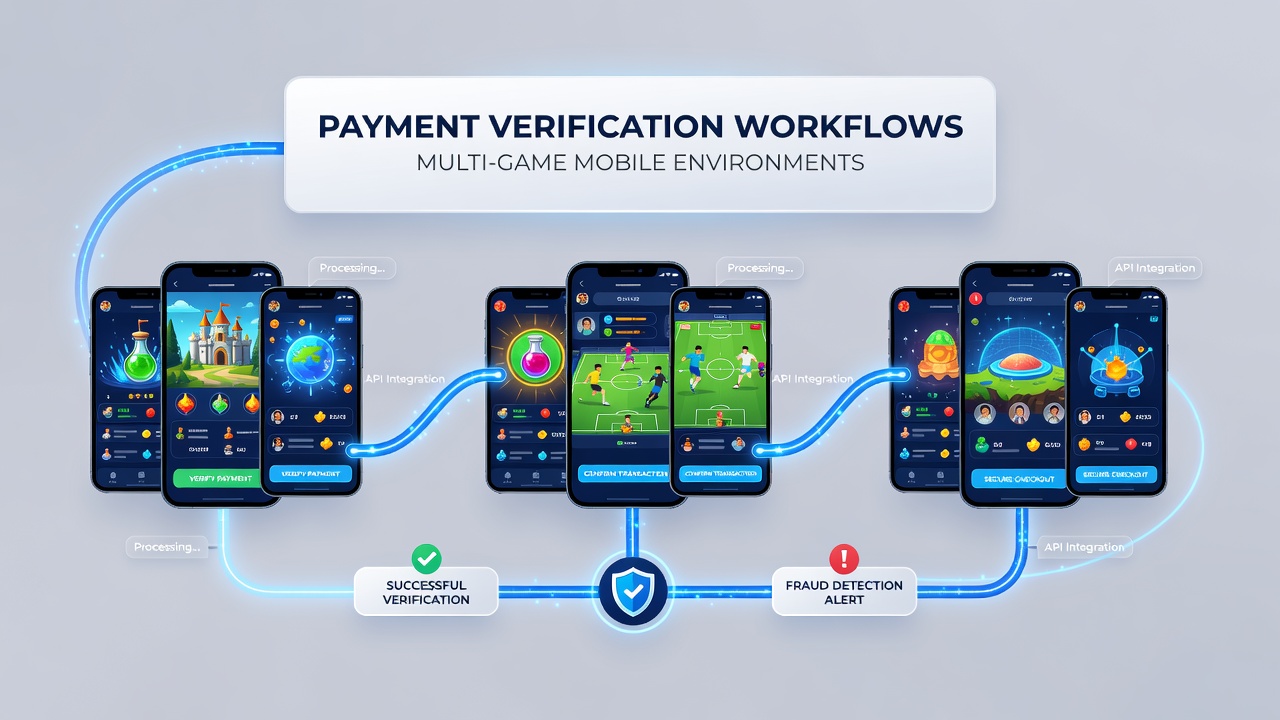
Cross-border transactions introduce additional variables including currency conversion and jurisdiction-specific rules, and platforms address these through geofencing combined with dynamic compliance modules that update automatically when regulations shift. Researchers discovered that hybrid verification approaches, which blend on-device processing with server-side analysis, cut average confirmation times by noticeable margins compared to fully centralized methods.
Regulatory Alignment and Data Handling Practices
Compliance requirements from bodies such as those overseeing digital commerce in North America and the Asia-Pacific region mandate detailed audit trails for every verified transaction, and these records support both internal reviews and external examinations. A NIST framework on digital identity outlines baseline controls that many mobile gaming providers reference when designing their pipelines, while industry associations in Europe publish supplementary guidelines tailored to interactive entertainment sectors.
Encryption standards applied during data transit and storage protect user information against interception, and regular penetration testing identifies potential weak points before they affect live operations. Those who've studied implementation cases report that modular architectures allow providers to swap verification providers or add new payment methods with minimal disruption to the overall system.
Performance Metrics and Optimization Strategies
Success rates for first-attempt verifications serve as key performance indicators, and teams track metrics including average processing duration alongside false positive rates that can frustrate legitimate users. Continuous refinement occurs through feedback loops where declined transactions undergo manual review to refine algorithmic thresholds, and this iterative process helps maintain balance between security and convenience.
Case studies from large-scale deployments reveal that incorporating predictive analytics allows preemptive verification for high-volume users, which reduces friction during live events. Observers note patterns where platforms that centralize verification logic across all game modules achieve higher consistency in policy enforcement than those maintaining separate systems per title.
Conclusion
Payment verification workflows continue to evolve alongside advances in mobile technology and regulatory expectations, with providers focusing on scalable solutions that maintain integrity across diverse game offerings. Data from multiple regions shows steady investment in these systems as user bases expand, and the emphasis remains on delivering reliable transaction handling that supports uninterrupted play. Future developments will likely center on further automation and enhanced interoperability between different verification services.