E-Wallet Integrations and Their Effect on Withdrawal Efficiency in Regulated Online Gaming Platforms
Ellis Richter · Jul 27, 2026
E-Wallet Integrations and Their Effect on Withdrawal Efficiency in Regulated Online Gaming Platforms
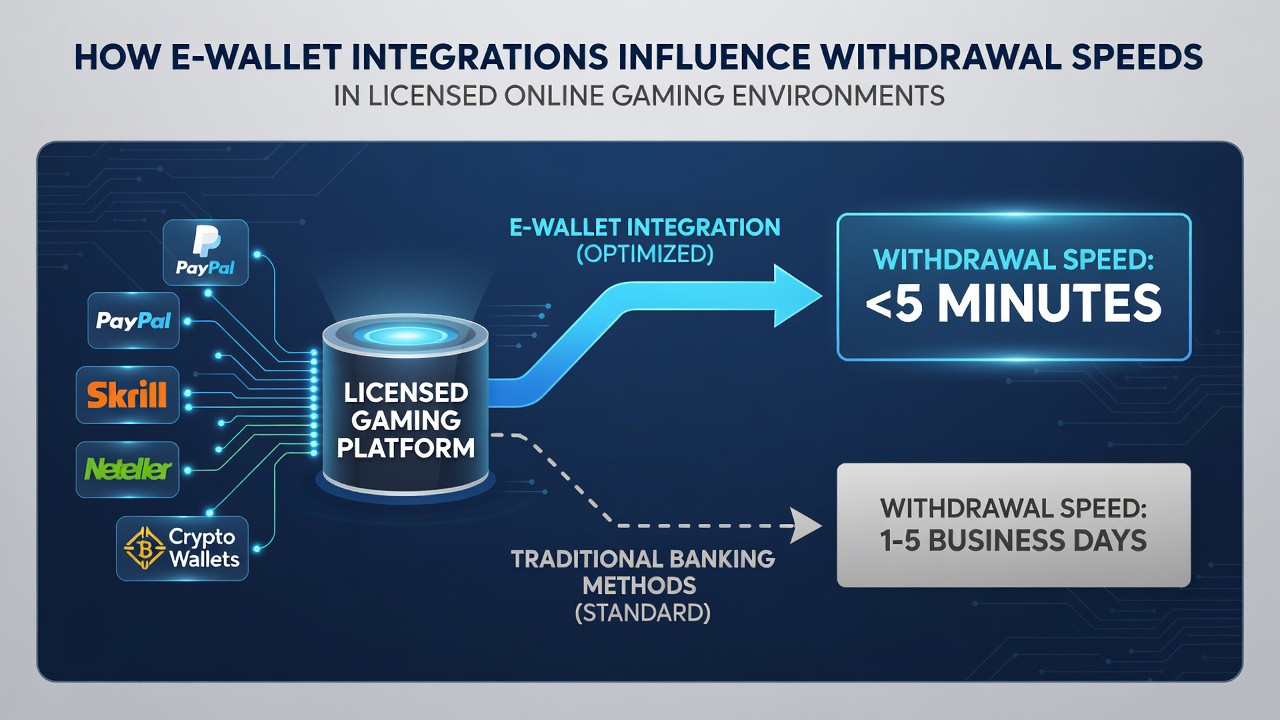
Digital wallet connections have become central to how licensed gaming operators handle player cashouts, and the technical setup behind these systems determines how quickly funds move from account balances to user accounts. Operators integrate APIs from providers such as PayPal, Skrill and Neteller directly into their platforms, which allows automated verification checks and reduces the number of manual steps required before a withdrawal processes.
Core Mechanics of E-Wallet Processing
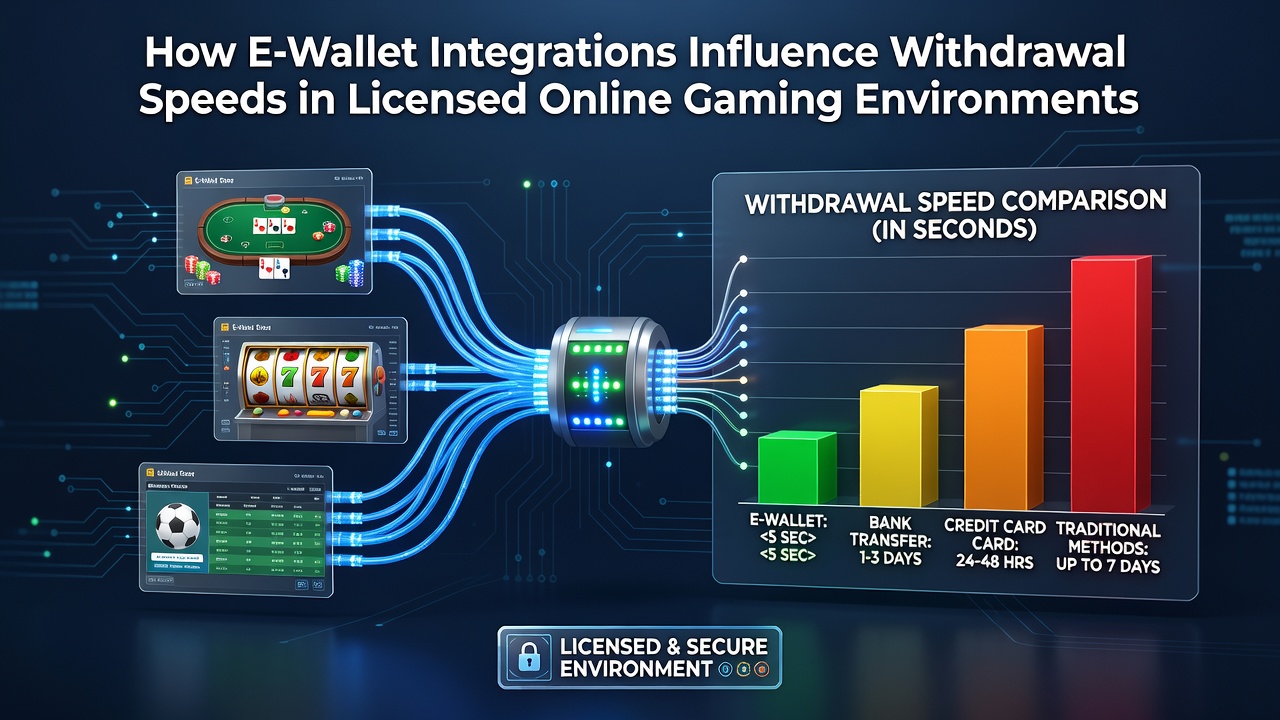
Once a player requests a withdrawal the integrated system pulls data from the gaming account and routes it through the e-wallet provider's servers, where balance confirmation happens in seconds rather than hours. Bank transfers, by contrast, require additional clearing steps through traditional financial networks that add one to five business days depending on the institutions involved. E-wallet flows bypass many of those intermediate layers because the funds already sit in a digital environment shared between the operator and the payment service.
Verification layers remain a common bottleneck even with e-wallets, and licensed platforms still apply identity checks mandated by regional regulators before releasing larger sums. Those checks can include document uploads or address confirmation, yet once completed the same verification record often carries forward to future withdrawals, shortening subsequent processing times.
Data Patterns Observed Through Mid-2026
Industry figures compiled through July 2026 show that platforms using direct e-wallet APIs complete more than 80 percent of verified withdrawals inside a 24-hour window, while non-integrated methods lag behind. The difference appears most clearly in high-volume jurisdictions where operators publish average payout reports. One study released by the American Gaming Association examined transaction logs across multiple states and found that e-wallet users received funds in an average of 4.2 hours after approval, compared with 47 hours for wire transfers.
Regional regulators in North America and Australia track these metrics as part of ongoing compliance reviews, and the Alcohol and Gaming Commission of Ontario has noted similar patterns in its market analysis reports. Faster settlement reduces player support tickets related to pending transactions, which in turn lowers operational costs for the operator.
Technical Factors That Determine Speed
API response times vary by provider and by the level of encryption applied to each transaction. Some e-wallet services maintain dedicated servers for gaming clients, which further compresses the interval between request and approval. Security protocols require real-time fraud screening, and operators that invest in higher-tier screening packages see fewer flagged transactions that require human review.
Account funding source also matters, because withdrawals must return to the original payment method under most licensing rules. When a player deposits via e-wallet the return path stays within that same ecosystem, eliminating the need to initiate a separate bank transfer. This closed-loop structure accounts for much of the observed speed advantage.
Regulatory Context Across Jurisdictions
Licensing authorities in different regions impose distinct reporting requirements on withdrawal performance, and operators must demonstrate that their e-wallet integrations meet those standards. The Nevada Gaming Control Board, for example, requires monthly submission of payout statistics broken down by method, and similar obligations exist under Australian state frameworks. Compliance teams monitor average completion times to ensure platforms do not exceed thresholds set in their operational licenses.
Academic research from the University of Nevada, Las Vegas has examined how these integrations affect overall player retention metrics, though the studies focus on measurable transaction data rather than behavioral outcomes. The findings indicate that platforms with sub-24-hour e-wallet payouts maintain steadier transaction volumes month to month.
Conclusion
E-wallet integrations influence withdrawal speeds primarily through direct API connections, reduced intermediary steps, and streamlined verification reuse. Data collected through July 2026 across multiple regulated markets consistently shows shorter average completion times when these systems operate without manual intervention. Operators continue to refine fraud detection layers and server infrastructure to maintain compliance while preserving the efficiency gains that come from digital wallet pathways.